
Quick note: some links below are Amazon affiliate links. If you buy through one, I may earn a small commission, and it doesn’t change your price. Listings change often, so check the current details before you order.
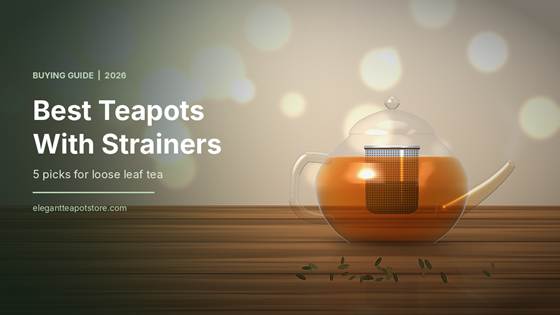
Loose leaf tea tastes better than the stuff in a bag, but only if you can get the leaves out of your cup. That is the whole job of a strainer. A good one lets the leaves open up, keeps them out of your mouth, and lets you stop the brew before it turns bitter.
The trouble is that “teapot with strainer” covers a lot of ground. Some pots have a basket that lifts out. Some have a row of tiny holes at the base of the spout. Some are really tea presses. Which one suits you depends on how you drink tea, so I’ve sorted the five picks below by what each does best.
The short version: if you want one pot that does the job well, choose a model with a removable basket infuser made from fine stainless steel mesh. Glass lets you watch the leaves, and porcelain keeps the heat in. Both are covered below.
Quick picks
| Pick | Best for | Material and size |
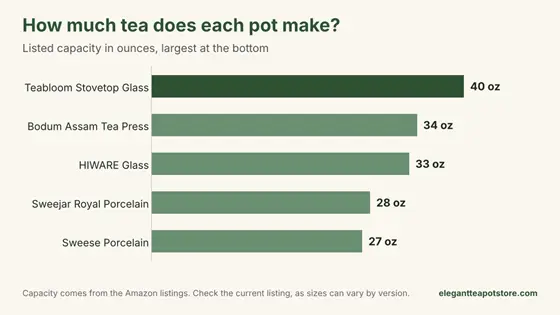
| Sweese 27 oz Porcelain Teapot | Everyday brewing | Porcelain, 27 oz, removable stainless steel infuser |
| HIWARE 1000 ml Glass Teapot | Watching the leaves | Borosilicate glass, about 33 oz, stainless steel mesh infuser |
| Teabloom Stovetop Glass Teapot | Large batches | Borosilicate glass, 40 oz |
| Sweejar Royal Porcelain Teapot | Gifting and display | Ceramic, 28 oz, removable infuser |
| Bodum Assam Glass Tea Press | Quick, hands-on brewing | Glass, 34 oz, stainless steel filter |
Details come from the Amazon listings. Check the page for the exact version, size and price before you buy.
The 3 kinds of strainer, and which one to want
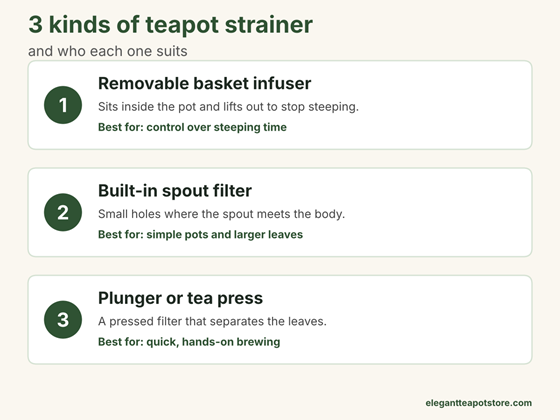
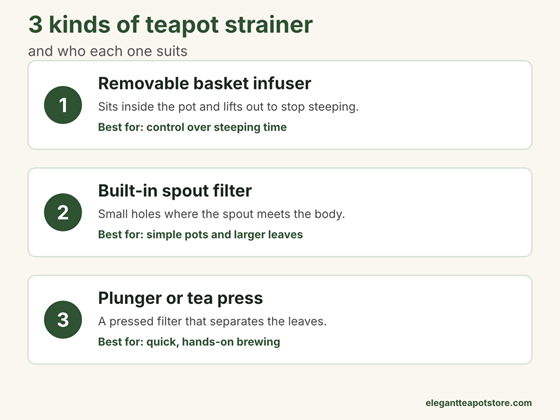
Removable basket infuser
A mesh basket sits inside the pot. When the tea is ready, you lift it out and the brewing stops. This is the most flexible setup, and it’s why most of my picks use it. It matters most with green and white teas, which turn harsh if the leaves sit in hot water for too long.
Built-in spout filter
Here the leaves float freely in the pot, and a row of small holes where the spout meets the body catches them as you pour. It’s simple and it suits large leaves. The downside is that the leaves keep steeping until the pot is empty, and fine or broken leaves can clog the holes.
Plunger or tea press
A press works like a small cafetiere. You add leaves and hot water, wait, then push the filter down. It’s quick and easy to understand, though the leaves stay in the water unless you pour everything out.
What to look for before you buy
Fine mesh that still gives leaves room
Mesh that’s too coarse lets small leaves slip through. A basket that’s too small squashes the leaves, so they can’t open properly. Look for a fine stainless steel mesh and a basket with some depth.
A snug fit
The infuser should sit securely under the rim without wobbling. A thumb tab or handle helps you lift it out without touching hot metal.
The right material for how you brew
Glass lets you watch the tea change colour and is easy to keep clean, but it loses heat faster. Porcelain and ceramic hold the heat well. If you plan to heat the pot on the stove, check that the maker says it’s stovetop safe. Many porcelain pots aren’t.
Easy cleaning
Wet leaves stick to mesh. A basket that comes apart or rinses cleanly will save you scrubbing. If a pot is listed as dishwasher safe, that’s a convenience, though rinsing straight after brewing is still the best habit.
The 5 best teapots with strainers
1. Sweese 27 oz Porcelain Teapot: best for everyday brewing
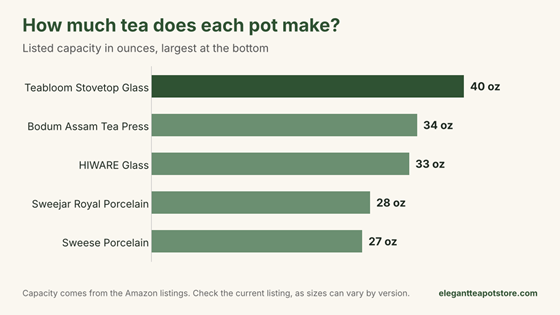
This is the sort of teapot that earns its place on the counter. It’s lead-free porcelain with a removable stainless steel infuser, and it’s listed as microwave and dishwasher safe. The infuser has a thumb tab, which makes it easy to lift out.
Good: porcelain holds heat well, simple to clean, the infuser lifts out easily.
Worth knowing: it isn’t a stovetop pot, so heat the water separately. Porcelain also hides the leaves, so you’ll judge the brew by time and taste.
Check the price on Amazon: Sweese 27 oz Porcelain Teapot
2. HIWARE 1000 ml Glass Teapot: best for watching the leaves
If you like watching the leaves unfurl, this is the one. It’s borosilicate glass, about 33 oz, with a removable stainless steel mesh infuser. It’s listed as safe for the stovetop and microwave, so you can heat water in the pot itself.
Good: clear glass, removable fine-mesh infuser, listed as stovetop safe.
Worth knowing: it’s a larger pot, which may feel like a lot if you only make a single cup. Glass also loses heat faster than porcelain.
Check the price on Amazon: HIWARE 1000 ml Glass Teapot
3. Teabloom Stovetop Glass Teapot: best for large batches
At 40 oz, this is the biggest pot in the group and suits a table of people or a long afternoon. It’s borosilicate glass made for the stovetop. I’ve covered it in more detail in our Teabloom glass teapot guide.
Good: large capacity, borosilicate glass, designed for stovetop use.
Worth knowing: a big pot takes up space and is heavy when full. Confirm the infuser details on the current listing.
Check the price on Amazon: Teabloom Stovetop Glass Teapot
4. Sweejar Royal Porcelain Teapot: best for gifting and display
A ceramic teapot with a 28 oz capacity, a removable infuser and a dishwasher-safe listing. It has a decorative look that makes it a natural gift, and it does the everyday job too.
Good: attractive design, removable infuser, dishwasher-safe listing.
Worth knowing: like most ceramic pots, don’t put it on a burner. Check the listing for the design and size you’re ordering.
Check the price on Amazon: Sweejar Royal Porcelain Teapot
5. Bodum Assam Glass Tea Press: best for quick, hands-on brewing
This is the press-style option: a 34 oz glass pot with a stainless steel filter that you push down once the tea is ready. It’s a good fit if you like a simple routine and want something that’s easy to understand.
Good: simple to use, clear glass, stainless steel filter.
Worth knowing: the leaves stay in the water unless you pour it all out, so it suits teas you’re happy to drink in one go.
Check the price on Amazon: Bodum Assam Glass Tea Press
How to brew loose leaf tea in a teapot with a strainer
The basics are the same for any of these pots.
- Warm the pot. Swirl a little hot water inside, then pour it out.
- Measure the leaves. A common starting point is about one teaspoon of leaves per 8 oz of water. Adjust to taste.
- Use the right water temperature. Green and white teas like it cooler, roughly 170 to 185°F (77 to 85°C). Black and herbal teas can take water close to boiling.
- Time it. Green tea usually needs two to three minutes, black tea three to five, and herbal blends five to seven.
- Lift the infuser out. This is the step that stops bitterness. If you leave the leaves in, the tea keeps getting stronger.
If you want to learn how to read what’s in your cup, our tea cupping guide explains how tasters judge flavour. For a robust black tea to try in one of these pots, see our guide to organic Keemun loose leaf tea.
Common problems and quick fixes
Leaves in your cup. Your mesh is probably too coarse, or the basket isn’t seated properly. Check the fit, or use a finer mesh for broken or small-leaf teas.
Bitter tea. The leaves are likely sitting in the water too long. Lift the infuser out on time, or use slightly cooler water.
A clogged strainer. Rinse the mesh straight after pouring, before the leaves dry onto it. A soft brush helps with stubborn bits.
Stains. Tea leaves a brown film over time. Soak the pot in warm water with a little baking soda, then rinse well.
Frequently asked questions
What is the strainer in a teapot for?
It holds the loose leaves so you can pour clear tea without leaves in your cup. A removable infuser also lets you stop the steeping on time.
Can I use a regular teapot with a separate strainer?
Yes. You can pour from a pot with no strainer through a handheld tea strainer into the cup. A built-in infuser is more convenient, though, and keeps the leaves contained.
Should I leave the infuser in the pot?
Only if you like strong tea. For most teas, especially green and white, lift it out once the time is up, otherwise it keeps brewing and can taste bitter.
Is glass or ceramic better for a teapot with a strainer?
Neither is better. Glass lets you watch the leaves and shows when a pot needs cleaning. Ceramic and porcelain hold heat longer. If you want to compare glass options, see our guide to the best glass teapots for loose leaf tea.
Can I put a teapot with a strainer on the stove?
Only if the maker says it’s stovetop safe. Some borosilicate glass pots are. Most porcelain and ceramic pots are not. If you want a pot built for the burner, see our stainless steel teapot guide.
How do I clean a teapot strainer?
Rinse it right after use so leaves don’t dry onto the mesh. For a deeper clean, soak it in warm water with a little baking soda, then brush gently and rinse.
My pick
For most people I’d start with the Sweese if you want something simple and heat-holding, or the HIWARE if you like glass and want to heat water in the same pot. Choose the Teabloom for a crowd, the Sweejar as a gift, and the Bodum if you prefer a press. Whichever you pick, check the listing for the size, material and heat rating you want.
Best Teapots With Strainers in 2026: 5 Picks for Loose Leaf Tea
Quick note: some links below are Amazon affiliate links. If you buy through one, I may earn a small commission, and it doesn’t change your price. Listings change often, so check the current details before you order.
Loose leaf tea tastes better than the stuff in a bag, but only if you can get the leaves out of your cup. That is the whole job of a strainer. A good one lets the leaves open up, keeps them out of your mouth, and lets you stop the brew before it turns bitter.
The trouble is that “teapot with strainer” covers a lot of ground. Some pots have a basket that lifts out. Some have a row of tiny holes at the base of the spout. Some are really tea presses. Which one suits you depends on how you drink tea, so I’ve sorted the five picks below by what each does best.
The short version: if you want one pot that does the job well, choose a model with a removable basket infuser made from fine stainless steel mesh. Glass lets you watch the leaves, and porcelain keeps the heat in. Both are covered below.
Quick picks
| Pick | Best for | Material and size |
| Sweese 27 oz Porcelain Teapot | Everyday brewing | Porcelain, 27 oz, removable stainless steel infuser |
| HIWARE 1000 ml Glass Teapot | Watching the leaves | Borosilicate glass, about 33 oz, stainless steel mesh infuser |
| Teabloom Stovetop Glass Teapot | Large batches | Borosilicate glass, 40 oz |
| Sweejar Royal Porcelain Teapot | Gifting and display | Ceramic, 28 oz, removable infuser |
| Bodum Assam Glass Tea Press | Quick, hands-on brewing | Glass, 34 oz, stainless steel filter |
Details come from the Amazon listings. Check the page for the exact version, size and price before you buy.
The 3 kinds of strainer, and which one to want
Removable basket infuser
A mesh basket sits inside the pot. When the tea is ready, you lift it out and the brewing stops. This is the most flexible setup, and it’s why most of my picks use it. It matters most with green and white teas, which turn harsh if the leaves sit in hot water for too long.
Built-in spout filter
Here the leaves float freely in the pot, and a row of small holes where the spout meets the body catches them as you pour. It’s simple and it suits large leaves. The downside is that the leaves keep steeping until the pot is empty, and fine or broken leaves can clog the holes.
Plunger or tea press
A press works like a small cafetiere. You add leaves and hot water, wait, then push the filter down. It’s quick and easy to understand, though the leaves stay in the water unless you pour everything out.
What to look for before you buy
Fine mesh that still gives leaves room
Mesh that’s too coarse lets small leaves slip through. A basket that’s too small squashes the leaves, so they can’t open properly. Look for a fine stainless steel mesh and a basket with some depth.
A snug fit
The infuser should sit securely under the rim without wobbling. A thumb tab or handle helps you lift it out without touching hot metal.
The right material for how you brew
Glass lets you watch the tea change colour and is easy to keep clean, but it loses heat faster. Porcelain and ceramic hold the heat well. If you plan to heat the pot on the stove, check that the maker says it’s stovetop safe. Many porcelain pots aren’t.
Easy cleaning
Wet leaves stick to mesh. A basket that comes apart or rinses cleanly will save you scrubbing. If a pot is listed as dishwasher safe, that’s a convenience, though rinsing straight after brewing is still the best habit.
The 5 best teapots with strainers
1. Sweese 27 oz Porcelain Teapot: best for everyday brewing
This is the sort of teapot that earns its place on the counter. It’s lead-free porcelain with a removable stainless steel infuser, and it’s listed as microwave and dishwasher safe. The infuser has a thumb tab, which makes it easy to lift out.
Good: porcelain holds heat well, simple to clean, the infuser lifts out easily.
Worth knowing: it isn’t a stovetop pot, so heat the water separately. Porcelain also hides the leaves, so you’ll judge the brew by time and taste.
Check the price on Amazon: Sweese 27 oz Porcelain Teapot
2. HIWARE 1000 ml Glass Teapot: best for watching the leaves
If you like watching the leaves unfurl, this is the one. It’s borosilicate glass, about 33 oz, with a removable stainless steel mesh infuser. It’s listed as safe for the stovetop and microwave, so you can heat water in the pot itself.
Good: clear glass, removable fine-mesh infuser, listed as stovetop safe.
Worth knowing: it’s a larger pot, which may feel like a lot if you only make a single cup. Glass also loses heat faster than porcelain.
Check the price on Amazon: HIWARE 1000 ml Glass Teapot
3. Teabloom Stovetop Glass Teapot: best for large batches
At 40 oz, this is the biggest pot in the group and suits a table of people or a long afternoon. It’s borosilicate glass made for the stovetop. I’ve covered it in more detail in our Teabloom glass teapot guide.
Good: large capacity, borosilicate glass, designed for stovetop use.
Worth knowing: a big pot takes up space and is heavy when full. Confirm the infuser details on the current listing.
Check the price on Amazon: Teabloom Stovetop Glass Teapot
4. Sweejar Royal Porcelain Teapot: best for gifting and display
A ceramic teapot with a 28 oz capacity, a removable infuser and a dishwasher-safe listing. It has a decorative look that makes it a natural gift, and it does the everyday job too.
Good: attractive design, removable infuser, dishwasher-safe listing.
Worth knowing: like most ceramic pots, don’t put it on a burner. Check the listing for the design and size you’re ordering.
Check the price on Amazon: Sweejar Royal Porcelain Teapot
5. Bodum Assam Glass Tea Press: best for quick, hands-on brewing
This is the press-style option: a 34 oz glass pot with a stainless steel filter that you push down once the tea is ready. It’s a good fit if you like a simple routine and want something that’s easy to understand.
Good: simple to use, clear glass, stainless steel filter.
Worth knowing: the leaves stay in the water unless you pour it all out, so it suits teas you’re happy to drink in one go.
Check the price on Amazon: Bodum Assam Glass Tea Press
How to brew loose leaf tea in a teapot with a strainer
The basics are the same for any of these pots.
- Warm the pot. Swirl a little hot water inside, then pour it out.
- Measure the leaves. A common starting point is about one teaspoon of leaves per 8 oz of water. Adjust to taste.
- Use the right water temperature. Green and white teas like it cooler, roughly 170 to 185°F (77 to 85°C). Black and herbal teas can take water close to boiling.
- Time it. Green tea usually needs two to three minutes, black tea three to five, and herbal blends five to seven.
- Lift the infuser out. This is the step that stops bitterness. If you leave the leaves in, the tea keeps getting stronger.
If you want to learn how to read what’s in your cup, our tea cupping guide explains how tasters judge flavour. For a robust black tea to try in one of these pots, see our guide to organic Keemun loose leaf tea.
Common problems and quick fixes
Leaves in your cup. Your mesh is probably too coarse, or the basket isn’t seated properly. Check the fit, or use a finer mesh for broken or small-leaf teas.
Bitter tea. The leaves are likely sitting in the water too long. Lift the infuser out on time, or use slightly cooler water.
A clogged strainer. Rinse the mesh straight after pouring, before the leaves dry onto it. A soft brush helps with stubborn bits.
Stains. Tea leaves a brown film over time. Soak the pot in warm water with a little baking soda, then rinse well.
Frequently asked questions
What is the strainer in a teapot for?
It holds the loose leaves so you can pour clear tea without leaves in your cup. A removable infuser also lets you stop the steeping on time.
Can I use a regular teapot with a separate strainer?
Yes. You can pour from a pot with no strainer through a handheld tea strainer into the cup. A built-in infuser is more convenient, though, and keeps the leaves contained.
Should I leave the infuser in the pot?
Only if you like strong tea. For most teas, especially green and white, lift it out once the time is up, otherwise it keeps brewing and can taste bitter.
Is glass or ceramic better for a teapot with a strainer?
Neither is better. Glass lets you watch the leaves and shows when a pot needs cleaning. Ceramic and porcelain hold heat longer. If you want to compare glass options, see our guide to the best glass teapots for loose leaf tea.
Can I put a teapot with a strainer on the stove?
Only if the maker says it’s stovetop safe. Some borosilicate glass pots are. Most porcelain and ceramic pots are not. If you want a pot built for the burner, see our stainless steel teapot guide.
How do I clean a teapot strainer?
Rinse it right after use so leaves don’t dry onto the mesh. For a deeper clean, soak it in warm water with a little baking soda, then brush gently and rinse.
My pick
For most people I’d start with the Sweese if you want something simple and heat-holding, or the HIWARE if you like glass and want to heat water in the same pot. Choose the Teabloom for a crowd, the Sweejar as a gift, and the Bodum if you prefer a press. Whichever you pick, check the listing for the size, material and heat rating you want.